"By beauty of course I mean truth, for the one involves the other; it
is only the false in art which is ugly, and it is only the false which is
immoral. The truth may be indecent, but it cannot be vicious, it can
never corrupt or deprave..."
Howells is actually talking about modern fiction and realism, but the idea of truth and beauty is not a new one and obviously quite important. (Remember, "all that is past possesses our present.") Keat's appreciated the relationship between truth and beauty in his reflections on the urn, and recognized that that which is true and closest to representing life as it is, is the best.
The story that comes to mind from Ovid's Metamorphoses is Arachne's. The tapestry that she weaves in the competition with Minerva is far more beautiful than the goddess', which of course makes her really mad. But, the point of this story is that art depicting truth, like Arachne's portrayal of the gods as they honestly behave, is superior to anything that is false (Minerva's). Nevertheless, things still end up badly for Arachne. Minerva turns her into a spider, but such is life, right? It makes for great art, whether in the form of a story or a painting or song or dance or even an urn.
The last part of Howells' quote reminds me of the Oscar Wilde quote that was brought up in class, as well. "There is no such thing as a moral or an immoral book. Books are well written or badly written." Basically, there is good art and bad art; it does not matter how disgusting or disturbing it may be, as long as it is done well. (Who decides this? Why, Dr. Sexson of course!) And, Ovid was definitely not worried about being moral. He just told the myths like they were, beautiful, indecent at times, and for this reason they influence and enrich our lives.




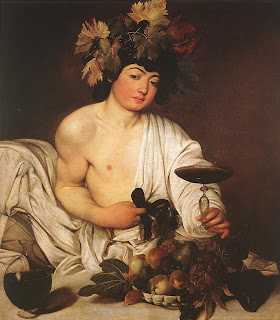 The Bacchae by Euripides is an interesting play, and I think that Dionysus is a fascinating god. He is, of course, the god of wine, agriculture, and theatre. And although he often inflicts madness on people to teach them a lesson or to get revenge, he is also associated with civilization and peace. His antithetical nature makes him quite frightening even while he is credited for bringing joy to Greece. Dionysus is definitely a god whose good side you want to be sure to stay on. In the introduction, I believe Woodruff talks about the smiling masks that the actor who played Dionysus would have worn. The fact that his smile can be benign or dangerous seems almost creepy to me. But, the question of madness and sanity in the play is an interesting one. It seems like they are almost switched, or sometimes Dionysus sounds crazy and Pentheus just stubborn. I think that this play is complex and that there is a lot that can be gotten from it. I will have more to say on the Bacchae in subsequent blogs.